CBD oil for spinal stenosis: what it can realistically do, and what it can't
Spinal stenosis is a structural problem, and that one fact should shape everything you expect from CBD oil. The spinal canal narrows, the nerve roots running through it get compressed, and the pain announces itself when you stand or walk and backs off when you sit or lean forward over a shopping cart. CBD oil does not widen a spinal canal. Neither does anything else you can buy without a surgeon. So the honest answer to “does CBD oil help spinal stenosis” is that CBD has never been tested in spinal stenosis, and anybody who tells you otherwise is selling well ahead of the evidence.
That’s not the end of the conversation, though. It’s the start of a more useful one, because the treatments that have been tested in stenosis perform less impressively than most patients are led to believe.
I don’t have spinal stenosis. I have rheumatoid arthritis, diagnosed at 15, and I’ve lived with it for more than 30 years. What I do know intimately is the experience of stacking one more thing onto a medication list that’s already long, and wanting someone to tell me plainly whether it’s worth it.
Why stenosis pain behaves differently from arthritis pain
The distinction matters because it predicts what will and won’t help.
Rainville and Lopez 2013 (PMID 23462576) compared older adults with MRI-documented lumbar spinal stenosis against those with lumbar disc herniation, drawing on two prospective cohorts of patients aged 60 and over. The stenosis group had more medical comorbidity, less intense leg pain, and less disability than the disc herniation group. Nerve root tension signs like a positive straight leg raise were common in disc herniation and rare in stenosis. Abnormal Achilles reflexes turned up more often in stenosis.
Read that clinically and you get a picture of slow mechanical compression rather than an acute inflammatory flare. My RA pain is driven by an immune system attacking joint tissue, which is why immunosuppression works on it. Stenosis pain is driven by bone and ligament crowding a nerve. An anti-inflammatory strategy is aimed at the wrong target.
What has actually been tested in lumbar spinal stenosis
Here is the part that surprises people, including people who’ve already had the injection.
| Treatment | What the best available evidence shows | Source |
|---|---|---|
| Epidural steroid injections | Across 90 RCTs, in lumbar spinal stenosis ESIs possibly reduce short-term and long-term disability, but did not reduce short-term pain (success rate difference -3.5%, 95% CI -12.6 to 5.6) | Armon et al. 2025 (PMID 39938000) |
| Pregabalin / gabapentin | Meta-analysis of 6 studies, 392 patients, mean age 60.3: pregabalin improved pain scores at 3 months, no significant difference in disability, and adverse events were significantly higher (OR 5.88) | Martínez et al. 2023 (PMID 38094885) |
| CBD | No clinical trials in spinal stenosis of any design | No source exists |
The Armon et al. review is an American Academy of Neurology guidelines summary, not a fringe paper. Its finding on lumbar stenosis specifically is that the injection may help you function while not measurably moving your short-term pain score. If you’ve had an epidural steroid injection and felt let down, the literature agrees with you.
I mention this not to talk you out of anything. I mention it because when the established options are this modest, the bar for “should I also try CBD” looks different than it does in a condition with a highly effective standard treatment.
Where CBD honestly fits
The closest relevant evidence is not about stenosis and not, strictly, about CBD alone.
Datta et al. 2025 (PMID 39545361) followed 1,139 chronic pain patients in the UK Medical Cannabis Registry, split by whether they had co-morbid sleep impairment. Both groups improved on pain and quality-of-life measures at 1, 3, 6 and 12 months, and the sleep-impaired group improved more on pain severity and sleep quality. Two caveats belong in the same breath as that result: it’s a prospective cohort with no control group, so the authors themselves frame it as association rather than proven effect, and the products studied were prescribed cannabis-based medicinal products, many containing THC. Our 2800mg oil is broad-spectrum and THC-free. That evidence is adjacent to what we sell, not a direct test of it.
So the realistic framing for stenosis is this: CBD is not a candidate for fixing the compression. It’s a candidate for the pain load and the wrecked sleep that come with it, and it should be judged on whether those two things measurably change for you.
Format matters more here than in most conditions. Stenosis pain starts deep inside the spinal canal, which means a topical rubbed onto the skin of your lower back is not reaching the source no matter how good the product is. I’ve written about that delivery problem in more detail in the CBD and back pain guide. If you’re trying CBD for stenosis, an oil or a transdermal patch is the format that makes sense. The roll-on is for the secondary muscle guarding around the area, which is real but is not the main event.
The interaction question nobody asks first
Stenosis patients tend to be older, and older patients tend to have full medication lists. This is where I’d spend your caution rather than on CBD itself.
If you’re on gabapentin or pregabalin, the concern isn’t a dramatic chemical interaction, it’s additive sedation and unsteadiness. Martínez et al. already found adverse events running nearly six times higher on gabapentinoids alone. Adding a second sedating compound to that, in someone whose walking is already compromised, is how falls happen. Our gabapentin and CBD page covers this properly.
If you’re on an opioid, be more careful still. Scicluna et al. 2026 (PMID 41904896) is a preclinical study in mice, not humans, but it’s worth knowing: acute CBD inhibited the metabolism of oxycodone, producing a three-fold increase in total oxycodone exposure and a 50% rise in peak concentration, likely through CYP2D6 and CYP3A4 inhibition. The authors explicitly say translational work is needed to know whether this happens at the lower doses people take as a supplement. It’s a reason to tell your prescriber, not a reason to panic.
How I navigate this
I was on prednisone for 23 years. Getting off it after starting CBD is the single biggest change in my health history, and it’s why this company exists. It’s also why I’m careful about how I describe what happened: prednisone and stenosis are different problems, and my outcome is not a prediction about yours.
I currently take metoprolol, lisinopril and Prozac alongside CBD daily. That combination is why I keep insisting people tell their prescriber rather than quietly experimenting.
What I’d do in a stenosis patient’s position is boring and deliberate. Start low and stay there a while: half a dropper of the 2800mg oil daily for the first two weeks, then a full 1ml dropper from week three. Change one variable at a time, keep everything else exactly as it is, and give it six to eight weeks before deciding. The titration protocol walks through the reasoning.
Track two specific things rather than a vague sense of how you feel: how far you can walk before you have to stop and lean forward, and how many times you wake in the night. Those are measurable. “Feeling a bit better” is not, and it’s exactly the kind of impression that keeps people paying for something that isn’t working.
What this means if you’re in the same situation
Keep your stenosis care where it is. Physical therapy, the injection if it’s helping your function, the surgical consultation if your walking distance is shrinking: none of those get replaced by a supplement with zero trials in your condition.
Treat CBD as an addition with a deadline. Eight weeks, measured against walking distance and sleep, with your prescriber informed. If it hasn’t moved either number, stop and keep your money. If it has, you’ll know precisely what it did for you, which is more than the research can currently tell either of us. Our broader chronic pain guide covers how to think about that evaluation over a longer horizon.
The narrowing is a structural fact. Everything else is about how well you live around it.
Frequently asked questions
Does CBD oil help spinal stenosis?
There are no clinical trials of CBD in spinal stenosis, so nobody can honestly present it as a treatment for the condition. Stenosis pain comes from a narrowed spinal canal compressing nerve roots, and CBD does not change that anatomy. What some people use it for is the surrounding load: pain severity and disrupted sleep. Judge it on those terms.
Is CBD better than gabapentin for spinal stenosis?
That's the wrong comparison, because gabapentinoids have actually been tested in stenosis and CBD hasn't. A 2023 meta-analysis of six studies found pregabalin improved pain scores at three months but not disability, with significantly more adverse events. If gabapentin is working for you, CBD is not a reason to stop it.
Can I take CBD with gabapentin or pregabalin?
The realistic concern is additive sedation rather than a dangerous chemical interaction. Both can cause drowsiness and unsteadiness, and unsteadiness matters a great deal when stenosis already affects your walking. Start CBD low, don't change your gabapentin dose on your own, and talk to your prescriber first.
Which CBD format makes sense for stenosis pain?
Stenosis pain originates deep in the spinal canal, so a topical applied to the skin of your lower back is not reaching the source. If you're going to try CBD, a systemic format like an oil or a transdermal patch is the more logical choice. A roll-on is for the secondary muscle tightness, not the nerve compression.
Should I stop my stenosis treatment to try CBD?
No. Epidural injections, gabapentinoids, physical therapy and surgical consultation all exist for reasons, and CBD has no trial evidence in this condition to justify replacing any of them. Treat it as something you add and evaluate, not something you substitute.
Products referenced in this post
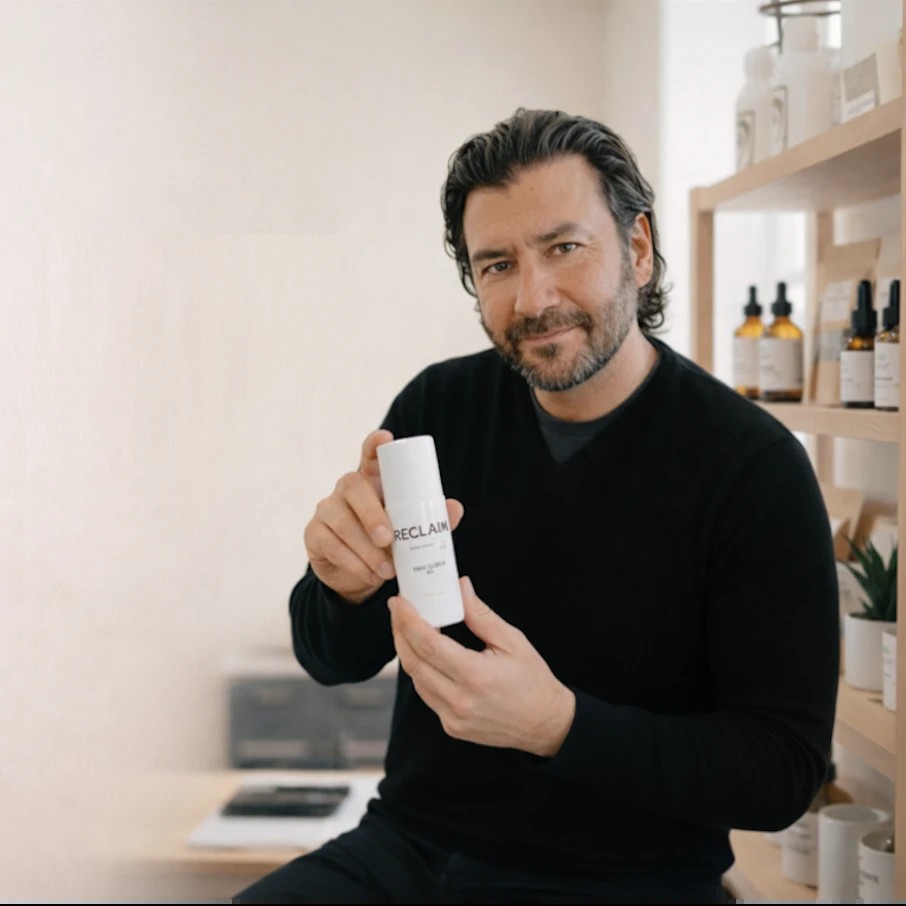
Founder of Reclaim Labs. Diagnosed with rheumatoid arthritis at 15, Ron spent 30 years navigating the medical system before self-formulating the broad-spectrum CBD oil that became Reclaim's flagship product. He reads the CBD-pharmacology literature closely and writes from lived experience, not marketing copy.