Mobility challenges affect millions of Americans living with chronic pain conditions, limiting their ability to perform daily activities and diminishing their quality of life. Whether caused by arthritis, fibromyalgia, or age-related joint deterioration, restricted movement creates a cascade of physical and emotional challenges. As individuals seek alternatives to traditional pain management approaches, CBD for mobility improvement has emerged as a promising natural solution. Unlike conventional medications that may carry significant side effects, cannabidiol offers a plant-based pathway to address the inflammation and discomfort that impede movement. Understanding how CBD works within the body and how to effectively incorporate it into a mobility enhancement strategy can empower individuals to reclaim their active lifestyles.
Understanding the Connection Between CBD and Movement
CBD interacts with the body's endocannabinoid system, a complex network of receptors that regulates pain perception, inflammation, and immune response. This interaction forms the foundation for how CBD supports enhanced mobility. The endocannabinoid system plays a crucial role in maintaining homeostasis throughout the body, including within joints, muscles, and connective tissues.
How CBD Addresses Root Causes of Limited Mobility
When considering cbd for mobility improvement, it's essential to recognize that CBD targets multiple pathways simultaneously. Research indicates that cannabidiol reduces inflammatory markers that contribute to joint stiffness and muscle tension. By modulating the immune system's response to injury or chronic conditions, CBD helps minimize the swelling that restricts range of motion.
Key mechanisms include:
- Reduction of pro-inflammatory cytokines that trigger pain signals
- Activation of CB2 receptors in peripheral tissues
- Modulation of pain perception through serotonin receptor interaction
- Support for tissue repair and recovery processes
Studies examining CBD's effects on exercise-induced muscle injury demonstrate its potential to reduce functional impairment and accelerate recovery. This research provides valuable insights into how CBD might benefit individuals experiencing mobility limitations from various causes.

Clinical Evidence Supporting CBD for Enhanced Movement
The scientific community has increasingly focused on cannabidiol's therapeutic potential for conditions that impair mobility. A growing body of evidence suggests that CBD offers measurable benefits for individuals struggling with restricted movement.
Research Findings on Joint Health and Flexibility
A notable study published in Nature examined transdermal cannabidiol for hand osteoarthritis, revealing improvements in both pain reduction and functional mobility. Participants reported enhanced ability to perform fine motor tasks and reduced morning stiffness. This open-label feasibility trial provides concrete data supporting CBD's role in addressing mobility challenges associated with degenerative joint conditions.
For those managing rheumatoid arthritis, understanding how CBD works becomes particularly relevant. The compound's anti-inflammatory properties directly address the autoimmune response that damages joint tissue. Many individuals with rheumatoid arthritis find that incorporating CBD into their wellness regimen helps them maintain greater functional capacity.
| Study Focus | Key Finding | Mobility Impact |
|---|---|---|
| Hand Osteoarthritis | Reduced pain and stiffness | Improved grip strength and dexterity |
| Exercise Recovery | Decreased inflammation markers | Faster return to normal activity levels |
| Athletic Performance | Enhanced endurance metrics | Sustained physical capacity during exertion |
Research exploring CBD's effects on endurance exercise in trained runners demonstrates that cannabidiol influences physiological responses during physical activity. These findings suggest broader applications for cbd for mobility improvement beyond clinical populations.
Choosing the Right CBD Products for Mobility Support
Product selection significantly influences outcomes when using CBD to enhance movement capabilities. The market offers numerous formulations, each with distinct advantages for addressing mobility concerns.
Full-Spectrum vs. Broad-Spectrum Options
Full-spectrum CBD products contain the complete range of cannabinoids, terpenes, and flavonoids found in hemp plants, including trace amounts of THC (below 0.3%). This combination creates an "entourage effect" where compounds work synergistically to enhance therapeutic benefits. Broad-spectrum formulations provide similar benefits while eliminating THC entirely, making them ideal for individuals who must avoid any THC content.
For managing arthritis-related mobility challenges, both options demonstrate effectiveness. The choice often depends on personal preferences and specific health considerations.
Application Methods for Targeted Relief
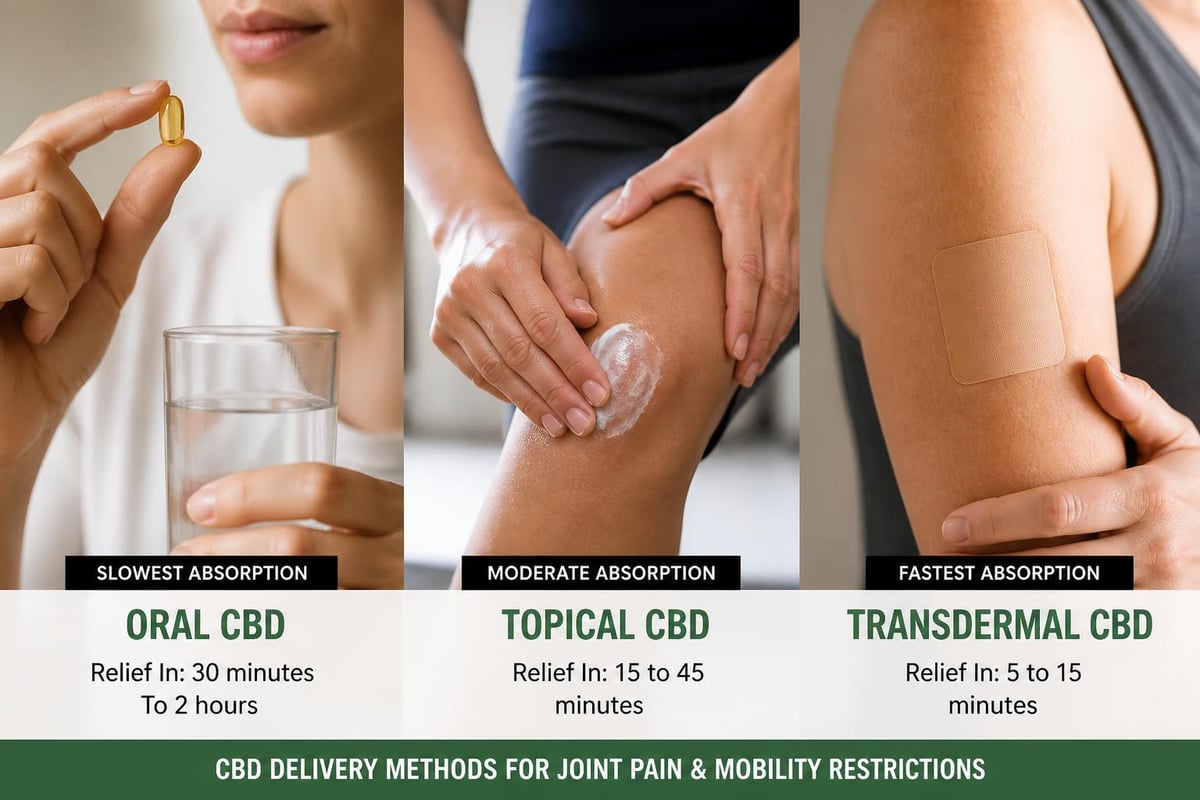
Different delivery methods offer varying advantages for mobility enhancement:
- Oral tinctures provide systemic relief that addresses widespread inflammation and discomfort
- Topical applications deliver concentrated CBD directly to affected joints and muscles
- Transdermal patches ensure steady cannabinoid delivery over extended periods
- Roll-on formulations combine portability with precise application for on-the-go relief
Topical applications work particularly well for localized mobility issues, such as foot pain that limits walking capacity or knee discomfort that restricts stair climbing. These products allow CBD to penetrate deeply into tissues without entering the bloodstream.
Dosing Strategies for Optimal Mobility Enhancement
Finding the appropriate CBD dose represents a personalized journey that varies based on individual factors including body weight, metabolism, condition severity, and product concentration.
Starting Low and Adjusting Gradually
The recommended approach to CBD dosing begins with conservative amounts, typically 10-20mg daily, then gradually increases until desired effects emerge. This method allows individuals to identify their minimum effective dose while minimizing potential side effects.
Dosing considerations for mobility improvement:
- Mild mobility limitations: 15-30mg daily
- Moderate restrictions: 30-60mg daily
- Severe impairment: 60mg+ daily, divided into multiple doses
For individuals managing conditions like fibromyalgia, higher doses may prove necessary to address the widespread pain that restricts movement. Consistent daily use typically yields better results than sporadic application.
Timing and Consistency Matter
CBD for mobility improvement demonstrates greatest efficacy when incorporated into a consistent daily routine. Taking CBD at the same times each day helps maintain stable cannabinoid levels in the body, providing continuous support for inflammation reduction and pain management.
Many individuals report optimal results when splitting their daily dose between morning and evening applications. Morning doses help address stiffness and prepare the body for daily activities, while evening doses support overnight recovery and reduce next-day soreness.
Combining CBD with Complementary Mobility Strategies
While CBD offers substantial benefits independently, integrating it with other mobility-enhancing approaches creates synergistic effects that maximize functional improvement.
Physical Therapy and Exercise Integration
CBD's pain-reducing properties enable individuals to participate more fully in physical therapy and exercise programs. By decreasing discomfort during movement, cannabidiol helps people push through therapeutic exercises that strengthen muscles and improve joint stability.
Physical activities that complement CBD use include:
- Low-impact aerobic exercises like swimming or cycling
- Stretching routines that enhance flexibility
- Strength training that supports joint stability
- Balance exercises that reduce fall risk
The research on CBD and exercise performance suggests that cannabidiol may actually enhance workout capacity by modulating physiological stress responses. This finding holds particular relevance for individuals rebuilding mobility after injury or during chronic condition management.
Nutritional Support for Joint Health
CBD works more effectively when combined with anti-inflammatory nutrition strategies. Omega-3 fatty acids, antioxidants, and adequate protein intake support the body's natural healing processes while CBD addresses pain and inflammation through different mechanisms.
| Nutrient | Mobility Benefit | Food Sources |
|---|---|---|
| Omega-3 Fatty Acids | Reduces systemic inflammation | Fatty fish, walnuts, flaxseed |
| Vitamin D | Supports bone health and muscle function | Sunlight exposure, fortified foods, supplements |
| Collagen | Strengthens cartilage and connective tissue | Bone broth, supplement powders |
| Antioxidants | Protects joints from oxidative damage | Berries, leafy greens, colorful vegetables |
This holistic approach to cbd for mobility improvement addresses multiple factors that influence movement capacity simultaneously.
Safety Considerations and Potential Interactions
Understanding CBD's safety profile helps individuals make informed decisions about incorporating cannabidiol into their mobility enhancement strategy.
Common Side Effects and How to Manage Them
Most people tolerate CBD well, particularly at moderate doses. However, some individuals experience mild side effects including dry mouth, drowsiness, or changes in appetite. These effects typically diminish as the body adjusts to regular CBD use.
Management strategies include:
- Staying well-hydrated throughout the day
- Taking CBD with food to minimize digestive discomfort
- Adjusting timing if drowsiness interferes with daily activities
- Reducing dose if side effects persist
Medication Interactions to Consider
CBD metabolizes through the same liver enzymes that process many common medications. Individuals taking blood thinners, seizure medications, or certain pain management drugs should consult healthcare providers before starting CBD. For seniors exploring CBD options, professional guidance ensures safe integration with existing medication regimens.

Real-World Applications for Specific Mobility Challenges
Different conditions require tailored approaches to maximize cbd for mobility improvement outcomes. Understanding condition-specific applications helps individuals select appropriate products and develop effective usage patterns.
Osteoarthritis and Degenerative Joint Disease
Osteoarthritis causes progressive cartilage breakdown that results in bone-on-bone friction, inflammation, and severe mobility restrictions. CBD addresses multiple aspects of this condition by reducing inflammatory responses and modulating pain perception. Research on CBD for osteoarthritis demonstrates significant potential for improving joint function and reducing reliance on conventional pain medications.
Application strategies for osteoarthritis include combining systemic CBD (oral tinctures) with topical applications directly on affected joints. This dual approach provides both widespread anti-inflammatory support and targeted relief where needed most.
Fibromyalgia-Related Movement Limitations
Fibromyalgia creates widespread musculoskeletal pain that severely restricts mobility and daily functioning. The condition's complex nature, involving nervous system dysfunction and heightened pain sensitivity, requires comprehensive management strategies. CBD's interaction with multiple receptor systems makes it particularly valuable for addressing fibromyalgia's multifaceted symptoms.
Many individuals with fibromyalgia report that consistent CBD use helps them maintain activity levels that would otherwise prove impossible. Understanding what fibromyalgia pain feels like helps contextualize CBD's potential impact on daily life quality.
Age-Related Mobility Decline
Natural aging processes contribute to decreased flexibility, muscle strength, and joint health. CBD supports healthy aging by addressing the chronic low-grade inflammation that accelerates physical decline. For older adults experiencing multiple mobility challenges simultaneously, CBD offers a single intervention that addresses various contributing factors.
Combining CBD with appropriate physical activity helps maintain independence and quality of life. Many seniors find that CBD enables them to participate in activities they had previously abandoned due to pain or stiffness.
Quality and Transparency in CBD Product Selection
Product quality directly influences cbd for mobility improvement outcomes. Understanding quality indicators helps consumers identify effective, safe products.
Third-Party Testing and Certificates of Analysis
Reputable CBD manufacturers provide third-party laboratory testing results confirming product potency, purity, and safety. These certificates of analysis verify CBD content, confirm absence of harmful contaminants, and ensure THC levels remain within legal limits.
Key quality markers include:
- Heavy metal testing results
- Pesticide screening outcomes
- Microbial contamination analysis
- Cannabinoid profile accuracy
- Solvent residue verification
Transparency in testing demonstrates manufacturer commitment to consumer safety and product efficacy. Companies that readily share testing results typically maintain higher quality standards throughout their production processes.
Extraction Methods and Product Purity
CO2 extraction represents the gold standard for CBD production, preserving beneficial compounds while eliminating unwanted elements. This method produces clean, potent extracts without harsh chemical solvents that might compromise product safety.
Understanding the difference between hemp oil and CBD oil prevents confusion when selecting products specifically designed for mobility improvement. Hemp seed oil offers nutritional benefits but lacks the therapeutic cannabinoids found in CBD extracts derived from hemp flowers and leaves.
Measuring Progress and Adjusting Your Approach
Tracking mobility improvements helps individuals assess CBD effectiveness and refine their usage strategies over time.
Objective Metrics for Mobility Assessment
Quantifiable measurements provide concrete data about mobility changes:
- Range of motion: Measure joint flexibility using simple goniometer tools or smartphone apps
- Walking distance: Track how far you can comfortably walk without increased pain
- Stair climbing: Count steps climbed and assess difficulty level
- Grip strength: Use hand dynamometers to measure functional hand capacity
- Morning stiffness duration: Note how long it takes to "loosen up" after waking
Recording these metrics weekly or monthly reveals trends that might not be apparent from day-to-day observations. Many individuals using cbd for mobility improvement notice gradual, cumulative benefits rather than dramatic immediate changes.
Adjusting Dosage and Product Selection
If initial approaches don't yield desired results within 4-6 weeks, consider these modifications:
- Increasing dosage within safe ranges
- Switching between full-spectrum and broad-spectrum formulations
- Adding topical applications to oral CBD use
- Trying different application times throughout the day
- Exploring higher-potency products for severe symptoms
For individuals managing chronic pain conditions, patience and systematic adjustment often lead to optimal outcomes. What works for one person may not work identically for another, making personalized experimentation essential.
Long-Term Sustainability and Lifestyle Integration
Successful cbd for mobility improvement requires viewing cannabidiol as part of a comprehensive wellness strategy rather than a quick fix.
Building Sustainable Habits
Long-term success depends on creating systems that support consistent CBD use:
- Establishing reminder systems for daily dosing
- Keeping CBD products in visible, accessible locations
- Maintaining adequate supply to prevent usage gaps
- Integrating CBD into existing routines like morning coffee or bedtime rituals
- Tracking usage patterns to identify what works best
The cellular-level benefits suggested by research on CBD's mitochondrial effects indicate that consistent use may support fundamental metabolic processes that influence overall health and mobility capacity.
Cost Considerations and Value Assessment
Quality CBD products represent an investment in health and functional capacity. When evaluating cost, consider the value of improved mobility in terms of enhanced quality of life, reduced need for other interventions, and ability to maintain independence.
| Factor | Consideration | Impact on Value |
|---|---|---|
| Product Concentration | Higher potency offers better cost per mg | Allows lower volume consumption |
| Application Method | Topicals may require more frequent application | Oral products often provide longer duration |
| Testing Standards | Third-party verification ensures you get what you pay for | Prevents waste on ineffective products |
| Manufacturer Reputation | Established companies typically maintain consistent quality | Reduces trial-and-error costs |
Many individuals find that premium CBD products deliver better results per dollar than cheaper alternatives that contain less active cannabinoid content or lower-quality extracts.
Creating Your Personal CBD Mobility Protocol
Developing an individualized approach maximizes cbd for mobility improvement outcomes based on your specific circumstances.
Assessment and Goal Setting
Begin by honestly evaluating current mobility limitations and establishing realistic improvement goals. Specific, measurable objectives like "walk two blocks without stopping" or "climb stairs without using handrails" provide clear targets for progress assessment.
Document baseline measurements before starting CBD use. This documentation enables objective comparison as you implement your protocol. Explore resources on arthritis management strategies to understand comprehensive approaches that complement CBD use.
Implementation Timeline
Week 1-2: Establish baseline measurements and begin with conservative CBD dosing
Week 3-4: Assess initial responses and make minor adjustments to timing or dose
Week 5-8: Evaluate measurable changes in mobility metrics and refine protocol
Week 9-12: Solidify effective routine and consider complementary interventions
Month 4+: Maintain consistent protocol while periodically reassessing and optimizing
This structured approach prevents premature conclusions about CBD effectiveness while allowing sufficient time for therapeutic benefits to manifest.
CBD for mobility improvement offers a scientifically-supported, natural approach to addressing the pain and inflammation that restrict movement and diminish quality of life. By understanding proper dosing, product selection, and integration with complementary strategies, individuals managing chronic conditions can reclaim greater functional capacity and independence. Reclaim Labs provides premium, third-party tested CBD products specifically formulated to support individuals dealing with arthritis, fibromyalgia, and chronic pain conditions. With transparent quality standards and a commitment to customer success, Reclaim Labs offers the reliable hemp solutions you need to take the next step toward improved mobility and enhanced daily functioning.