Navigating the world of CBD products for pain management can feel overwhelming, especially when confronted with varying potencies, concentrations, and dosing recommendations. Understanding how CBD potency directly impacts pain relief is essential for anyone seeking natural alternatives to manage chronic conditions. This comprehensive cbd potency guide for pain will help you make informed decisions about selecting the appropriate strength and dosage for your specific needs, whether you're managing rheumatoid arthritis, fibromyalgia, or other inflammatory conditions.
Understanding CBD Potency and Concentration
CBD potency refers to the total amount of cannabidiol contained in a product, typically measured in milligrams (mg). A 30ml bottle containing 1,000mg of CBD has a different concentration than a 30ml bottle with 2,800mg, even though the volume remains the same. This distinction matters significantly when addressing pain.
Concentration is calculated by dividing total CBD content by volume. A higher concentration means more CBD per serving, which often translates to more effective pain management for chronic conditions. However, potency alone doesn't determine efficacy-the spectrum type, bioavailability, and individual factors all play crucial roles.
Key Potency Categories
| Potency Level | Total CBD (mg) | Best For | Typical Conditions |
|---|---|---|---|
| Low | 300-600mg | Beginners, mild discomfort | General wellness, occasional tension |
| Medium | 750-1,500mg | Moderate pain | Intermittent joint pain, minor inflammation |
| High | 1,800-2,500mg | Chronic pain | Arthritis, fibromyalgia, persistent inflammation |
| Extra High | 2,800mg+ | Severe chronic pain | Severe rheumatoid arthritis, intense flare-ups |
When developing a cbd potency guide for pain, it's critical to recognize that research on CBD's effectiveness for pain relief emphasizes the superiority of full-spectrum formulations over isolates. The entourage effect-where cannabinoids, terpenes, and other hemp compounds work synergistically-enhances therapeutic outcomes.
Matching Potency to Pain Severity
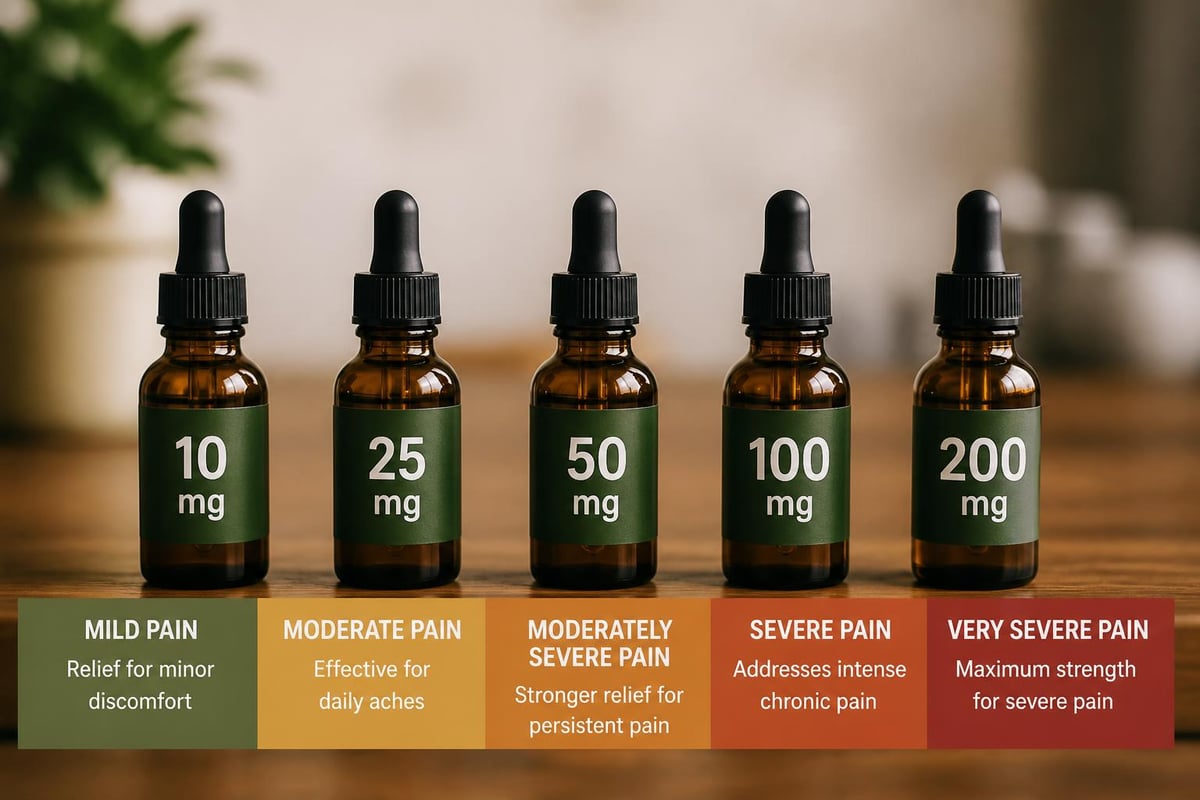
Determining the right potency starts with honestly assessing your pain level and frequency. A person experiencing occasional knee discomfort requires a vastly different approach than someone managing daily fibromyalgia symptoms.
For mild, intermittent pain, lower potency products (300-750mg) often provide sufficient relief. These formulations work well for those new to CBD or managing minor inflammatory responses. Starting low allows your body to adjust while you monitor effectiveness.
Moderate chronic pain typically responds better to medium-to-high potency formulations (1,000-2,100mg). Conditions like osteoarthritis or recurring inflammation require consistent, therapeutic doses that lower potencies cannot deliver. The appropriate CBD oil strength becomes particularly important when addressing persistent discomfort that impacts daily activities.
Severe Pain Considerations
- Rheumatoid arthritis flare-ups: Require potencies of 2,100mg or higher
- Fibromyalgia: Often needs 2,500-2,800mg for effective symptom management
- Chronic inflammatory conditions: Benefit from extra-high potency combined with consistent dosing
Individuals dealing with conditions detailed in our guide on beating rheumatoid arthritis pain frequently find that higher potencies deliver the relief conventional options couldn't provide. This cbd potency guide for pain emphasizes that severe conditions demand therapeutic-grade concentrations.
Dosing Strategies Based on Potency
Calculating your proper dose involves understanding both the product's total potency and its concentration per serving. A dropper from a 1,000mg bottle delivers less CBD than the same dropper volume from a 2,800mg bottle.
Standard dosing formula: Total CBD (mg) ÷ Total servings = CBD per serving
For a 30ml bottle containing 2,100mg CBD with approximately 30 servings (1ml each), each full dropper provides roughly 70mg of CBD. Adjusting from there based on response becomes straightforward.
Progressive Dosing Approach
- Start low: Begin with 10-15mg daily regardless of potency level
- Monitor for 3-5 days: Track pain levels, inflammation, and any side effects
- Increase gradually: Add 5-10mg every few days until desired relief
- Find your threshold: Continue until you reach optimal pain management
- Maintain consistency: Use the same dose for at least two weeks before adjusting
According to dosage guidelines for pain relief, most individuals find their effective dose falls between 20-60mg daily, though those with severe chronic pain may require 75-120mg or more. This cbd potency guide for pain recommends working with higher potency products to achieve therapeutic doses without consuming excessive oil volume.
Full-Spectrum vs. Broad-Spectrum Potency Considerations
The spectrum type significantly influences how potency translates to pain relief. Full-spectrum CBD contains all hemp plant compounds including trace THC (under 0.3%), while broad-spectrum removes THC but retains other beneficial cannabinoids and terpenes.
Full-spectrum products leverage the entourage effect more completely, potentially requiring lower absolute doses to achieve equivalent pain relief compared to broad-spectrum or isolate products. When following this cbd potency guide for pain, consider that a 1,500mg full-spectrum product may provide relief comparable to a 2,000mg broad-spectrum alternative.
| Spectrum Type | Potency Efficiency | THC Content | Best Applications |
|---|---|---|---|
| Full-Spectrum | Highest (entourage effect) | <0.3% | Maximum pain relief, inflammation |
| Broad-Spectrum | High (partial entourage) | 0% | Pain relief with zero THC |
| Isolate | Moderate | 0% | THC-sensitive individuals |
Those managing fibromyalgia symptoms often report superior results with full-spectrum formulations at higher potencies. The combination of cannabinoids addresses multiple pain pathways simultaneously, providing more comprehensive relief than single-compound products.
Bioavailability and Effective Potency
Listed potency on a product label doesn't equal absorbed potency. Bioavailability-the percentage of CBD that reaches your bloodstream-varies dramatically by delivery method.
Sublingual oils (held under the tongue) offer 20-30% bioavailability, making them efficient for pain management. Capsules and edibles, processed through the digestive system, may only achieve 6-15% bioavailability. This means a 2,000mg sublingual oil effectively delivers more CBD than a 2,000mg capsule product.
For individuals exploring different methods of using CBD for pain, understanding these differences becomes crucial when selecting potency. A comprehensive cbd potency guide for pain must account for delivery method when recommending strengths.
Bioavailability Comparison
- Sublingual tinctures: 20-30% (ideal for systemic pain)
- Capsules/edibles: 6-15% (convenient but less efficient)
- Topicals: Localized absorption (excellent for joint-specific pain)
- Vaping: 40-50% (fastest onset, shortest duration)
When managing chronic pain conditions, sublingual oils at appropriate potencies provide the optimal balance of bioavailability, convenience, and sustained relief. Understanding how CBD works in your body helps explain why delivery method matters as much as potency.
Adjusting Potency for Individual Factors
Body weight, metabolism, pain severity, and previous cannabinoid exposure all influence your ideal potency. Two people with identical conditions may require vastly different doses for equivalent relief.
Body weight considerations: Heavier individuals generally need higher doses. A rough starting guideline suggests 1-6mg CBD per 10 pounds of body weight for pain management. Someone weighing 150 pounds might start with 15-90mg daily depending on pain severity.
Metabolism speed affects how quickly your body processes CBD. Fast metabolizers may need higher potencies or more frequent dosing to maintain therapeutic levels. Slow metabolizers might find lower potencies sufficient with longer-lasting effects.
Personal Tolerance Factors
- Previous opioid or cannabinoid use may increase initial dose requirements
- Genetic variations in endocannabinoid receptors affect CBD sensitivity
- Concurrent medications can influence CBD metabolism and effectiveness
- Condition severity directly correlates with necessary potency levels
According to the high-potency CBD guide, individuals with chronic pain conditions benefit most from potencies exceeding 2,000mg, particularly when managing severe inflammatory responses. This cbd potency guide for pain emphasizes personalization over one-size-fits-all recommendations.

Third-Party Testing and Potency Verification
A product claiming 2,800mg of CBD should contain exactly that amount-but without third-party verification, you're trusting the manufacturer's word. Independent laboratory testing confirms potency accuracy, ensuring you receive the therapeutic dose you're paying for.
Certificate of Analysis (COA) documents reveal actual CBD content, THC levels, and contamination screening. Reputable companies provide COAs for every product batch. When comparing products as part of this cbd potency guide for pain, always verify third-party testing results.
Potency discrepancies are common in untested products. Studies have found some CBD products contain 20-50% less CBD than labeled. For pain management where precise dosing matters, these variations undermine treatment effectiveness and waste money.
What to Look for in COAs
- Cannabinoid profile: Confirms CBD potency and THC content
- Testing date: Recent tests (within 6 months) ensure current batch accuracy
- Accredited laboratory: ISO-certified labs provide reliable results
- Contaminant screening: Pesticides, heavy metals, solvents, and microbials
- Batch number matching: Ensures COA corresponds to your specific product
Transparency in testing reflects company integrity. Companies like Reclaim Labs provide accessible COAs because they understand that effective pain management requires accurate, verifiable potencies. When following the 2026 CBD buyer's guide, prioritize verified potency above marketing claims.
Combining Potencies for Targeted Relief
Some pain management strategies benefit from using multiple potencies or delivery methods simultaneously. A high-potency sublingual oil (2,100-2,800mg) provides systemic relief while a topical targets specific joints or areas.
This combination approach proves particularly effective for conditions like arthritis, where both systemic inflammation and localized joint pain require attention. The systemic dose addresses overall inflammatory response while topicals deliver concentrated relief to problem areas.
Layering strategy: Start with a consistent high-potency sublingual dose for baseline pain management, then add topicals as needed for breakthrough pain or specific flare-ups. This cbd potency guide for pain recommends mastering one delivery method before combining approaches.
High-Potency Products for Severe Chronic Pain
Individuals managing severe, persistent pain conditions often find relief only with extra-high potency formulations (2,500mg and above). These therapeutic-grade products deliver substantial CBD per serving, making it practical to achieve doses of 75-150mg without consuming excessive oil.
High-potency topicals deserve special consideration for localized pain. A topical containing 1,000mg+ CBD per ounce provides concentrated relief when applied directly to painful joints, making them invaluable for foot pain or other specific areas.
When to Choose Extra-High Potency
- Daily pain levels consistently rating 7+ on a 10-point scale
- Multiple failed attempts with lower potency products
- Conditions requiring doses exceeding 75mg daily
- Desire to minimize oil volume while maximizing therapeutic effect
- Severe inflammatory conditions like advanced rheumatoid arthritis
The cost-effectiveness of high-potency products often surprises consumers. While initially more expensive, the cost-per-milligram typically decreases with higher potencies, making them economical for long-term pain management.
Monitoring and Adjusting Your Potency Strategy
Effective pain management with CBD requires ongoing assessment and willingness to adjust. Keep a simple journal tracking daily dose, pain levels, inflammation, sleep quality, and any side effects. This data reveals patterns that guide potency adjustments.
Red flags requiring potency increase:
- Consistent pain levels above 5/10 despite regular dosing
- Need to dose more frequently than recommended
- Previously effective dose no longer providing relief
- Inflammatory flare-ups breaking through current regimen
Signs your potency may be too high:
- Excessive drowsiness or fatigue
- Digestive discomfort
- Achieving adequate relief at lower doses
- Financial strain from unnecessarily high potency
This cbd potency guide for pain emphasizes that the "right" potency evolves with your condition, lifestyle changes, and body's adaptation. What works initially may need adjustment after several months of consistent use.
Safety Considerations Across Potency Levels
CBD demonstrates excellent safety profiles even at high doses, but responsible use requires awareness. Most people tolerate up to 1,500mg daily without significant side effects, though practical pain management rarely requires such extreme amounts.
Potential interactions: CBD can affect how your body metabolizes certain medications, particularly blood thinners, seizure medications, and some antidepressants. Consult healthcare providers before starting high-potency CBD, especially if managing multiple medications alongside chronic pain conditions.
Start conservatively regardless of pain severity. Even if you ultimately need 2,800mg potency, beginning with proper dosing protocols prevents unnecessary side effects and allows accurate assessment of CBD's effectiveness for your specific pain type.
Responsible High-Potency Use
- Never exceed manufacturer's recommended maximum daily serving
- Allow 2-3 weeks at consistent dosing before increasing potency
- Monitor for interactions if taking prescription medications
- Choose reputable brands with verified third-party testing
- Consider consulting with healthcare providers familiar with CBD
Quality matters exponentially more at higher potencies. Contaminants or inaccuracies in a 300mg product cause minimal issues, but the same problems in a 2,800mg formulation could pose significant concerns. Prioritize companies demonstrating commitment to purity and accuracy.
Building Your Personal Potency Protocol
Creating an effective cbd potency guide for pain management requires synthesizing all these considerations into a personalized approach. Start by honestly assessing your pain severity, frequency, and impact on daily life. Match that assessment to appropriate starting potencies.
Document your baseline pain levels before beginning CBD. Use a consistent 0-10 scale rating pain morning, midday, and evening. Track inflammation, mobility, sleep quality, and mood. This comprehensive picture reveals CBD's full impact beyond simple pain reduction.
Give each potency level adequate trial time-minimum two weeks at consistent dosing before adjusting. CBD's pain-relieving effects build gradually as cannabinoids accumulate in your system and your endocannabinoid system optimizes. Premature potency changes prevent accurate assessment.
Your 30-day potency optimization plan:
- Days 1-7: Establish baseline with starting potency
- Days 8-14: Maintain dose, monitor response patterns
- Days 15-21: Adjust potency if needed based on results
- Days 22-30: Stabilize at effective dose, refine timing
This structured approach, combined with insights from resources about CBD hemp oil benefits for pain, creates a sustainable, effective pain management strategy centered on appropriate potency selection.
Finding the right CBD potency for pain management requires patience, careful observation, and quality products that deliver verified cannabinoid content. This comprehensive cbd potency guide for pain provides the framework for selecting appropriate strengths based on your specific conditions and needs. Reclaim Labs offers premium full-spectrum and broad-spectrum CBD products in therapeutic potencies from 1,000mg to 2,800mg, all verified through rigorous third-party testing to ensure you receive exactly the potency needed for effective chronic pain and inflammation management. Explore their range of solutions designed specifically for conditions like rheumatoid arthritis and fibromyalgia, backed by transparency and a commitment to helping you reclaim your life from chronic pain.