Understanding the nuances between different CBD formulations can feel overwhelming when you're searching for effective pain relief. For individuals managing chronic conditions like rheumatoid arthritis or fibromyalgia, choosing between full-spectrum vs broad-spectrum CBD for pain represents a critical decision that directly impacts therapeutic outcomes. Both formulations offer distinct advantages, yet their differences in composition, interaction with the body, and potential benefits require careful consideration. This comprehensive guide explores the science behind each CBD type, helping you make an informed choice for your pain management needs.
Understanding CBD Spectrum Types
The cannabis plant contains over 100 different cannabinoids, each contributing unique properties to the final product. When manufacturers extract CBD from hemp, they can preserve varying amounts of these compounds, resulting in different spectrum types.
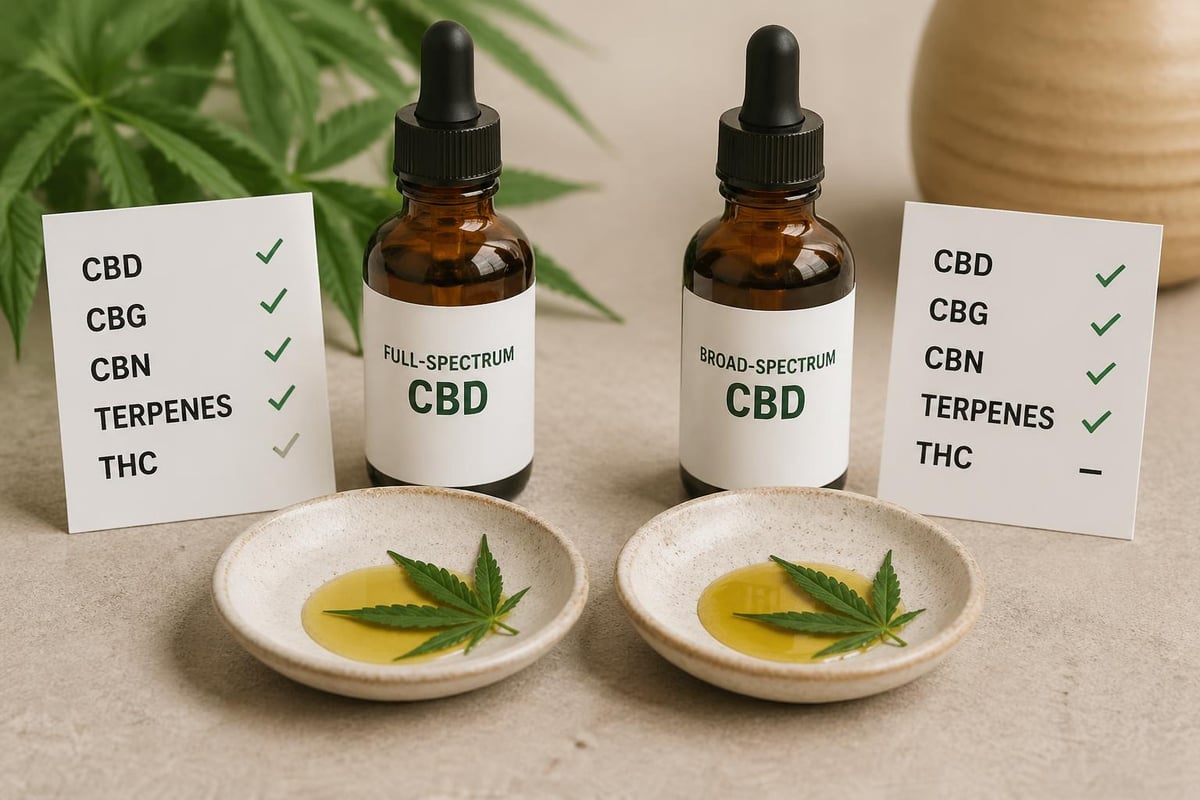
Full-spectrum CBD contains all naturally occurring cannabinoids, terpenes, flavonoids, and trace amounts of THC (less than 0.3% in legal products). This complete plant profile aims to harness what researchers call the "entourage effect," where compounds work synergistically to enhance therapeutic benefits.
Broad-spectrum CBD includes multiple cannabinoids and terpenes but undergoes additional processing to remove all detectable THC. This formulation provides many benefits of the entourage effect while eliminating concerns about THC content.
The Entourage Effect Explained
The entourage effect theory suggests that cannabinoids and terpenes produce greater therapeutic effects when working together than any single compound alone. Research indicates this synergy may particularly benefit pain management by enhancing anti-inflammatory properties and modulating pain signals through multiple pathways.
For those exploring CBD hemp oil benefits for pain, understanding this concept proves essential. The differences between full-spectrum and broad-spectrum CBD can significantly influence how effectively each formulation addresses specific pain conditions.
Chemical Composition Breakdown
| Component | Full-Spectrum CBD | Broad-Spectrum CBD |
|---|---|---|
| CBD (Cannabidiol) | High concentration | High concentration |
| THC (Tetrahydrocannabinol) | <0.3% | 0% (non-detectable) |
| Other Cannabinoids (CBG, CBN, CBC) | Yes | Yes |
| Terpenes | Yes | Yes |
| Flavonoids | Yes | Yes |
| Entourage Effect | Maximum potential | Moderate potential |
The presence or absence of THC represents the primary distinction when evaluating full-spectrum vs broad-spectrum CBD for pain. While trace THC amounts may enhance the entourage effect, some individuals prefer complete THC removal for employment requirements, drug testing concerns, or personal preferences.
Minor Cannabinoids and Their Roles
Beyond CBD and THC, minor cannabinoids contribute significantly to pain relief:
- CBG (Cannabigerol): Demonstrates anti-inflammatory properties particularly beneficial for inflammatory pain conditions
- CBN (Cannabinol): Shows sedative effects that may help pain-related sleep disturbances
- CBC (Cannabichromene): Works synergistically with CBD to reduce inflammation and enhance analgesic effects
Both full-spectrum and broad-spectrum formulations typically preserve these valuable compounds. The composition differences primarily center on THC content rather than other beneficial cannabinoids.
Pain Relief Mechanisms
CBD interacts with the endocannabinoid system (ECS), a complex network of receptors throughout the body that regulates pain perception, inflammation, and immune response. When comparing full-spectrum vs broad-spectrum CBD for pain, both formulations engage these mechanisms but potentially through different pathways.
How Full-Spectrum Works for Pain
Full-spectrum products leverage complete plant chemistry to address pain through multiple mechanisms. The trace THC content binds more readily to CB1 and CB2 receptors, potentially enhancing pain signal modulation. Terpenes like myrcene and beta-caryophyllene add their own anti-inflammatory properties.
Studies suggest full-spectrum formulations may provide superior relief for severe chronic pain conditions. The synergistic compound interaction creates a broader therapeutic window, particularly beneficial for managing rheumatoid arthritis and similar inflammatory conditions.
How Broad-Spectrum Works for Pain
Broad-spectrum CBD still delivers robust pain relief despite THC absence. The preserved cannabinoid and terpene profile maintains significant entourage effect benefits. Research indicates broad-spectrum formulations effectively reduce inflammation and modulate pain perception through CB2 receptor activation and other non-cannabinoid pathways.
For individuals sensitive to THC or requiring complete THC avoidance, broad-spectrum products offer an excellent alternative. Many users report comparable pain relief to full-spectrum products, particularly when using higher concentrations.

Effectiveness for Specific Pain Conditions
Different pain conditions may respond better to particular CBD spectrum types. Understanding these nuances helps optimize therapeutic outcomes.
Arthritis and Joint Pain
Full-spectrum advantages: The complete cannabinoid profile may provide superior anti-inflammatory benefits for arthritis. Research examining CBD hemp oil benefits for arthritis suggests trace THC enhances relief for severe joint inflammation.
Broad-spectrum advantages: Eliminates THC-related concerns while maintaining strong anti-inflammatory properties. Many arthritis patients achieve excellent results with broad-spectrum formulations, particularly when combined with topical applications.
Fibromyalgia Pain
Fibromyalgia presents unique challenges with widespread pain, fatigue, and cognitive symptoms. The benefits of CBD oil for fibromyalgia extend beyond pain relief to include improved sleep quality and reduced anxiety.
Both spectrum types show promise for fibromyalgia management. Full-spectrum products may offer slight advantages for severe cases, while broad-spectrum formulations provide consistent relief without THC exposure.
Neuropathic Pain
Neuropathic pain resulting from nerve damage often proves resistant to conventional treatments. The complete cannabinoid profile in full-spectrum CBD may more effectively address nerve pain through enhanced receptor interaction.
However, broad-spectrum products also demonstrate significant efficacy for neuropathic conditions, particularly when using higher potency formulations.
Safety Considerations and Side Effects
| Consideration | Full-Spectrum CBD | Broad-Spectrum CBD |
|---|---|---|
| Drug Testing | May trigger positive results | Minimal risk |
| Legal Status | Legal (<0.3% THC) | Legal (0% THC) |
| Psychoactive Effects | None at standard doses | None |
| Side Effects | Mild (drowsiness, dry mouth) | Mild (drowsiness, dry mouth) |
| Medication Interactions | Possible | Possible |
Both formulations generally demonstrate excellent safety profiles. The primary concern with full-spectrum vs broad-spectrum CBD for pain relates to THC content rather than overall safety.
Drug Testing Implications
Full-spectrum products contain trace THC that may accumulate with regular high-dose usage, potentially triggering positive drug tests. Individuals subject to workplace testing often prefer broad-spectrum formulations to eliminate this risk entirely.
Medication Interactions
Both CBD spectrum types may interact with certain medications, particularly those metabolized by cytochrome P450 enzymes. Common interactions involve blood thinners, anti-seizure medications, and some pain medications. Consulting healthcare providers before starting CBD supplementation proves essential for anyone taking prescription medications.
Dosing and Administration Methods
Effective pain management requires appropriate dosing and delivery methods. When evaluating full-spectrum vs broad-spectrum CBD for pain, administration routes significantly impact bioavailability and onset time.
Oral Tinctures and Oils
Sublingual administration provides relatively fast absorption and flexible dosing. Start with lower doses (10-20mg CBD) and gradually increase until achieving desired relief.
- Full-spectrum: May require lower doses due to enhanced entourage effect
- Broad-spectrum: Often needs slightly higher doses for equivalent effects
- Onset time: 15-45 minutes
- Duration: 4-6 hours
Topical Applications
Topical CBD targets localized pain without systemic absorption. Products like CBD hemp infused relief roll-ons deliver concentrated relief directly to affected areas.
Both spectrum types work effectively in topical formulations. The choice between full-spectrum vs broad-spectrum CBD for pain in topicals often depends on personal preference and skin sensitivity.
Transdermal Patches
CBD patches for pain relief provide sustained release over extended periods. These products offer consistent blood levels, ideal for chronic pain management requiring around-the-clock relief.

Quality and Testing Standards
Third-party laboratory testing ensures product quality, potency, and purity. Reputable manufacturers provide certificates of analysis (COAs) documenting cannabinoid content and confirming the absence of contaminants.
What to Look for in COAs
When comparing products, examine third-party test results carefully:
- Cannabinoid profile: Verify CBD content matches label claims
- THC levels: Confirm full-spectrum products contain <0.3% THC and broad-spectrum shows non-detectable levels
- Contaminant screening: Check for pesticides, heavy metals, and residual solvents
- Terpene analysis: Indicates product quality and potential therapeutic benefits
Premium manufacturers maintain transparency through readily accessible testing documentation. Quality assurance becomes particularly important when managing serious conditions requiring consistent, reliable relief.
Extraction Methods Matter
The extraction process significantly impacts final product quality. CO2 extraction preserves delicate cannabinoids and terpenes while avoiding chemical solvents. Both full-spectrum and broad-spectrum products benefit from this advanced extraction technology.
Making Your Choice: Personal Factors to Consider
Selecting between full-spectrum vs broad-spectrum CBD for pain depends on individual circumstances, preferences, and therapeutic goals.
Choose Full-Spectrum If You:
- Experience severe chronic pain requiring maximum therapeutic potential
- Don't face drug testing requirements
- Want to harness the complete entourage effect
- Have used broad-spectrum without achieving desired results
- Feel comfortable with trace THC content
Choose Broad-Spectrum If You:
- Must avoid all THC for employment, legal, or personal reasons
- Experience sensitivity to THC
- Want robust entourage effect benefits without THC
- Prefer products with zero psychoactive compound risk
- Need consistent, predictable effects without THC variables
Additional Considerations
Your specific pain condition influences spectrum choice. Understanding how CBD works for different pain types helps guide this decision. Those managing inflammatory conditions like osteoarthritis may find CBD oil for osteoarthritis benefits from either spectrum type depending on individual response.
Cost and Value Comparison
| Factor | Full-Spectrum CBD | Broad-Spectrum CBD |
|---|---|---|
| Average Cost | Moderate | Slightly higher |
| Processing Complexity | Standard | Additional THC removal |
| Dose Efficiency | May require less | May require slightly more |
| Overall Value | Excellent | Excellent |
Price differences between formulations typically remain minimal. The additional processing required for THC removal sometimes increases broad-spectrum costs slightly, though competition keeps prices comparable.
Value assessment should consider effectiveness rather than price alone. Some individuals achieve better results with lower doses of full-spectrum products, while others prefer higher doses of broad-spectrum formulations for equivalent relief.
Legal and Regulatory Landscape
Federal law permits hemp-derived CBD products containing less than 0.3% THC. Both full-spectrum and broad-spectrum CBD products meeting this criterion remain legal nationwide under the 2018 Farm Bill.
State regulations occasionally impose additional restrictions. Some states prohibit any THC content in CBD products, making broad-spectrum formulations the only legal option. Staying informed about local regulations ensures compliance and access to appropriate products.
Workplace Policies
Beyond legal considerations, workplace drug testing policies influence spectrum choice. Even legal full-spectrum CBD may cause positive drug tests, potentially violating employment agreements. Broad-spectrum products eliminate this concern while maintaining therapeutic effectiveness.
Combining CBD Spectrums with Other Therapies
CBD works synergistically with various pain management approaches. Integrating either full-spectrum or broad-spectrum CBD into comprehensive treatment plans often enhances overall outcomes.
Effective combination strategies include:
- Physical therapy: CBD may reduce inflammation and pain during rehabilitation exercises
- Stress management: Cannabinoid effects on anxiety may complement mindfulness practices
- Anti-inflammatory diet: Nutritional approaches work synergistically with CBD's anti-inflammatory properties
- Sleep hygiene: CBD's calming effects support better rest, crucial for pain management
Exploring arthritis management strategies demonstrates how CBD integrates into holistic treatment approaches for chronic conditions.
Real-World Application and User Experiences
Individual responses to full-spectrum vs broad-spectrum CBD for pain vary considerably. Many users report excellent results with both formulations, while others express strong preferences based on personal experience.
Factors influencing individual response include:
- Pain severity and type: Neuropathic versus inflammatory pain may respond differently
- Individual biochemistry: Endocannabinoid system variations affect CBD metabolism
- Concurrent medications: Drug interactions modify CBD effectiveness
- Dosage and consistency: Regular, appropriate dosing produces better outcomes than sporadic use
Starting with one spectrum type for 2-3 weeks allows adequate assessment before switching formulations if needed. Maintaining a pain journal helps track effectiveness, side effects, and optimal dosing.
Understanding the distinctions between full-spectrum vs broad-spectrum CBD for pain empowers you to make informed decisions aligned with your specific needs, preferences, and circumstances. Both formulations offer powerful natural alternatives for managing chronic pain conditions when sourced from quality manufacturers committed to transparency and rigorous testing. Reclaim Labs provides premium full-spectrum and broad-spectrum CBD hemp oil products specifically formulated for chronic pain and inflammation, with comprehensive third-party testing ensuring safety and efficacy. Explore their range of professionally crafted solutions designed to help you reclaim your life from persistent pain.