Living with joint pain can feel overwhelming, especially when it interferes with daily activities and diminishes quality of life. Millions of Americans struggle with conditions like arthritis, fibromyalgia, and inflammation that require consistent pain management strategies. Understanding the various joint pain killers available-from traditional pharmaceuticals to emerging natural alternatives-empowers individuals to make informed decisions about their health. This comprehensive guide explores the spectrum of pain relief options, their mechanisms, benefits, and considerations to help you navigate the complex landscape of joint pain management.
Understanding Joint Pain and Treatment Approaches
Joint pain stems from numerous sources including osteoarthritis, rheumatoid arthritis, injuries, and chronic inflammatory conditions. The approach to managing this pain varies significantly based on severity, underlying causes, and individual health profiles.
Common causes of joint discomfort include:
- Degenerative conditions like osteoarthritis
- Autoimmune disorders such as rheumatoid arthritis
- Acute injuries and trauma
- Chronic inflammation from various sources
- Age-related wear and tear on cartilage
Treatment philosophies have evolved considerably over recent years. While pharmaceutical interventions remain important, there's growing recognition that multi-modal approaches often deliver superior outcomes. Managing arthritis pain effectively requires understanding both immediate relief strategies and long-term management techniques.

The Role of Inflammation in Joint Pain
Inflammation serves as the body's protective response to injury or disease, but chronic inflammation becomes destructive. Understanding this mechanism helps explain why different joint pain killers work through various pathways. Some medications suppress inflammatory responses, while others interrupt pain signals to the brain.
| Treatment Category | Primary Mechanism | Onset Time | Duration |
|---|---|---|---|
| NSAIDs | Anti-inflammatory | 30-60 minutes | 4-12 hours |
| Acetaminophen | Pain signal blocking | 20-30 minutes | 4-6 hours |
| CBD Products | Endocannabinoid system | 15-45 minutes | 4-8 hours |
| Corticosteroids | Immune suppression | Hours to days | Weeks to months |
Traditional Pharmaceutical Joint Pain Killers
Conventional medicine offers several categories of joint pain killers, each with distinct mechanisms and applications. These medications have been extensively studied and remain foundational in pain management protocols.
Non-Steroidal Anti-Inflammatory Drugs (NSAIDs)
NSAIDs represent the most commonly prescribed joint pain killers worldwide. These medications work by inhibiting cyclooxygenase (COX) enzymes responsible for producing prostaglandins, which trigger inflammation and pain responses.
Popular NSAIDs include:
- Ibuprofen (Advil, Motrin)
- Naproxen (Aleve)
- Celecoxib (Celebrex)
- Ketoprofen (various brands)
- Diclofenac (Voltaren)
Medical experts note various medications for osteoarthritis each carry specific benefits and risks. Traditional NSAIDs affect both COX-1 and COX-2 enzymes, which explains their effectiveness but also their gastrointestinal side effects. Newer selective COX-2 inhibitors aim to preserve stomach protection while maintaining anti-inflammatory benefits.
Acetaminophen for Joint Pain
Acetaminophen operates differently from NSAIDs, primarily affecting pain perception in the central nervous system rather than targeting inflammation directly. This makes it particularly useful for individuals who cannot tolerate NSAIDs due to stomach sensitivity or cardiovascular concerns.
While acetaminophen provides reliable pain relief, it offers limited anti-inflammatory benefits. For conditions where inflammation drives pain-like rheumatoid arthritis-combination approaches often prove more effective. The differences between rheumatoid arthritis and osteoarthritis significantly influence which joint pain killers work best.
Prescription-Strength Options
When over-the-counter joint pain killers prove insufficient, healthcare providers may prescribe stronger medications. These include higher-dose NSAIDs, COX-2 selective inhibitors, or even short-term opioid medications for severe acute pain.
Considerations for prescription pain relievers:
- Higher efficacy comes with increased side effect risks
- Regular monitoring by healthcare providers becomes essential
- Dependency potential exists with certain medication classes
- Insurance coverage and cost factors significantly impact accessibility
Topical Joint Pain Killers and Their Advantages
Topical treatments deliver active ingredients directly to affected areas, minimizing systemic exposure and reducing side effect risks. These formulations have gained popularity as safer alternatives for localized joint pain.
How Topical Medications Work
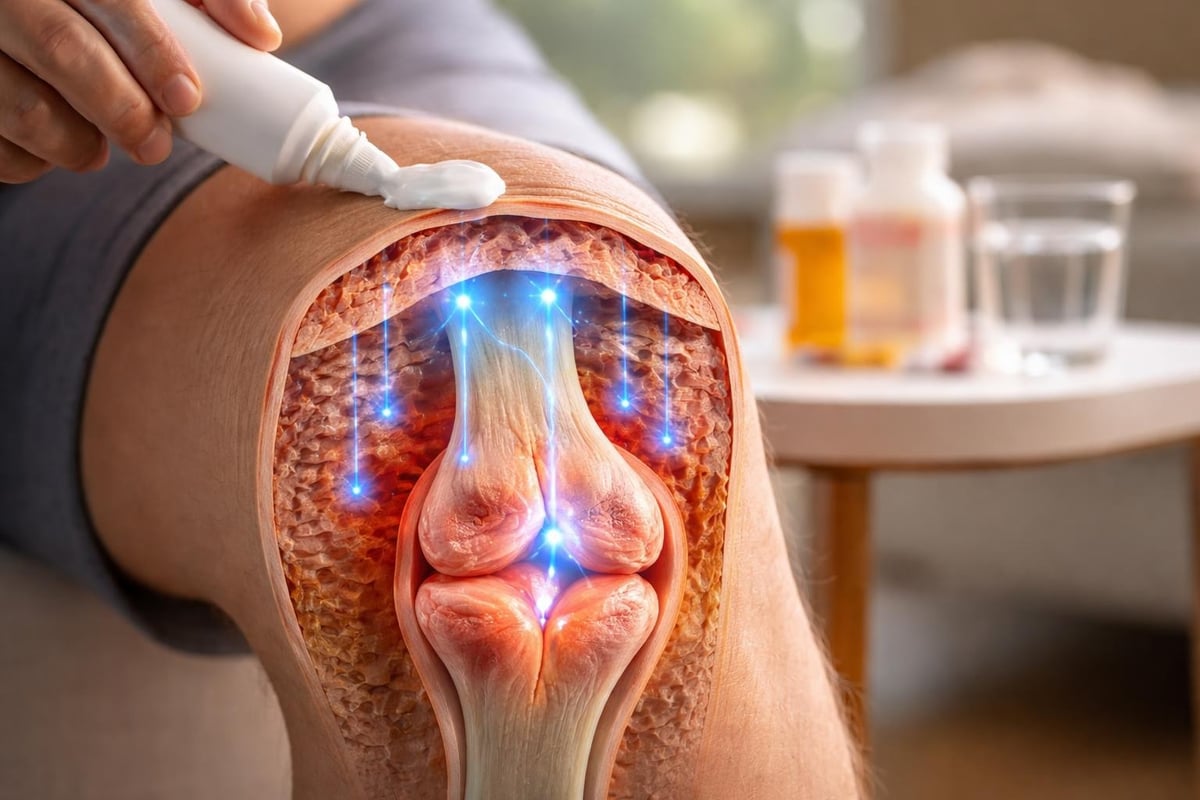
Topical joint pain killers penetrate skin layers to reach underlying tissues, muscles, and joints. This localized delivery system means lower doses achieve therapeutic effects at the application site while minimizing blood concentration levels that cause systemic side effects.
| Topical Type | Active Ingredient | Best For | Application Frequency |
|---|---|---|---|
| NSAID Creams | Diclofenac, Ibuprofen | Knee, hand arthritis | 3-4 times daily |
| Capsaicin | Capsaicin (pepper extract) | Chronic pain | 3-4 times daily |
| Menthol/Camphor | Counterirritants | Temporary relief | As needed |
| CBD Topicals | Cannabidiol | Inflammation, pain | 2-3 times daily |
Benefits of Topical Applications
Topical formulations offer distinct advantages for managing joint pain. They provide targeted relief without the gastrointestinal distress associated with oral NSAIDs. People managing multiple joints can apply treatments selectively, customizing their approach based on daily needs.
The rise of CBD roll-on applications represents an evolution in topical pain management. These products combine convenience with natural anti-inflammatory compounds, appealing to individuals seeking alternatives to traditional pharmaceuticals.
Natural Alternatives to Conventional Joint Pain Killers
Growing interest in holistic health has accelerated research into natural compounds for pain management. While "natural" doesn't automatically mean safer or more effective, certain alternatives show promising results backed by scientific evidence.
CBD and Cannabinoid-Based Solutions
Cannabidiol (CBD) has emerged as a compelling option for individuals seeking natural joint pain relief. Unlike THC, CBD produces no psychoactive effects while interacting with the body's endocannabinoid system to modulate pain and inflammation responses.
Research suggests CBD influences multiple pathways relevant to joint pain:
- Reduces inflammatory cytokine production
- Modulates pain signal transmission
- Supports tissue repair processes
- Provides neuroprotective benefits
Understanding how CBD works helps explain its effectiveness for conditions like rheumatoid arthritis and fibromyalgia. Full-spectrum and broad-spectrum CBD products contain additional beneficial cannabinoids and terpenes that may enhance therapeutic effects through the "entourage effect."
Glucosamine and Chondroitin
These structural components of cartilage have been widely studied as joint pain supplements. Various supplements for joint pain show mixed research results, but many individuals report subjective improvements in pain and mobility.
Key points about cartilage-building supplements:
- Most effective for mild to moderate osteoarthritis
- Require consistent use for 2-3 months before assessing effectiveness
- Generally well-tolerated with minimal side effects
- May slow cartilage degradation in some individuals
Omega-3 Fatty Acids and Anti-Inflammatory Diet
Dietary approaches complement pharmaceutical and supplement interventions. Omega-3 fatty acids from fish oil possess anti-inflammatory properties that support joint health when consumed regularly at therapeutic doses.
Injectable Treatments for Severe Joint Pain
When oral medications and topical joint pain killers provide inadequate relief, injection therapies offer more intensive interventions. These treatments deliver medication directly into affected joints for concentrated, longer-lasting effects.
Corticosteroid Injections
Corticosteroid injections rapidly reduce inflammation and pain in specific joints. While highly effective for acute flares, their use requires careful consideration due to potential long-term effects on cartilage and bone health.
Healthcare providers typically limit corticosteroid injections to 3-4 times annually per joint. The temporary nature of relief means these treatments work best as part of comprehensive management strategies rather than standalone solutions.
Hyaluronic Acid Injections
Hyaluronic acid injections (viscosupplementation) aim to restore joint lubrication in osteoarthritic joints. These treatments involve a series of injections administered over several weeks, with effects potentially lasting several months.
Emerging Biologic Therapies
Biologic medications represent cutting-edge treatment for inflammatory joint conditions. These targeted therapies interrupt specific immune system pathways driving inflammation, offering hope for individuals with autoimmune forms of arthritis who haven't responded to conventional joint pain killers.
Complementary Approaches to Joint Pain Management
Medication alone rarely provides optimal outcomes. Integrating physical therapies, lifestyle modifications, and self-care strategies creates synergistic effects that enhance pain relief and improve function.
Physical Therapy and Exercise
Comprehensive joint pain relief strategies emphasize movement as medicine. Targeted exercises strengthen supporting muscles, improve joint stability, and enhance range of motion-all contributing to reduced pain and better function.
Effective physical therapy components include:
- Strengthening exercises for muscles surrounding affected joints
- Range-of-motion activities to maintain flexibility
- Low-impact aerobic conditioning for cardiovascular health
- Balance and proprioception training to prevent falls
Heat and Cold Therapy
Temperature-based treatments provide accessible, low-risk pain relief options. Cold therapy reduces inflammation and numbs acute pain, while heat therapy relaxes muscles, improves circulation, and soothes chronic aches.
Many individuals develop personalized protocols alternating between these modalities based on their symptoms. At-home treatment approaches empower people to take active roles in managing their conditions.
Mind-Body Techniques
Chronic pain affects psychological wellbeing as much as physical health. Techniques like meditation, mindfulness, and cognitive behavioral therapy help individuals develop healthier pain responses and reduce suffering associated with persistent discomfort.

Choosing the Right Joint Pain Killers for Your Situation
Selecting appropriate pain management strategies requires considering multiple factors including pain severity, underlying conditions, other medications, lifestyle preferences, and treatment goals. No single approach works universally-effective management demands personalization.
Factors Influencing Treatment Selection
| Consideration | Impact on Treatment Choice |
|---|---|
| Pain Severity | Determines intensity of intervention needed |
| Underlying Condition | Guides mechanism-based selection |
| Other Health Conditions | Influences safety and contraindications |
| Current Medications | Affects interaction risks |
| Age | Modifies dosing and appropriateness |
| Lifestyle Factors | Determines practical feasibility |
Working with Healthcare Providers
Collaborative decision-making between patients and healthcare teams produces superior outcomes. Open communication about pain levels, functional limitations, treatment preferences, and concerns ensures strategies align with individual needs and values.
Regular follow-up appointments allow providers to assess treatment effectiveness, adjust dosages, and modify approaches based on response. Early diagnosis and intervention significantly improves long-term outcomes for progressive conditions.
Monitoring for Side Effects and Efficacy
All medications and supplements carry potential risks. Vigilant monitoring helps identify adverse effects early while tracking whether treatments deliver meaningful benefits. Keep detailed records of:
- Pain levels using standardized scales
- Functional improvements or limitations
- Side effects experienced
- Medication adherence
- Quality of life changes
The Future of Joint Pain Treatment
Medical research continues advancing our understanding of pain mechanisms and developing innovative interventions. Emerging therapies promise more targeted, effective approaches with fewer side effects than current options.
Personalized Medicine Approaches
Genetic testing and biomarker analysis may soon guide treatment selection, predicting which individuals will respond best to specific joint pain killers. This precision medicine approach could eliminate much trial-and-error currently required to find effective regimens.
Novel Cannabinoid Research
Beyond CBD, researchers are investigating other cannabinoids and terpenes for pain management applications. Exploring cannabinoids beyond CBD and THC reveals a complex landscape of compounds with therapeutic potential.
Advanced delivery systems like nano-emulsification improve bioavailability, allowing lower doses to achieve therapeutic effects. These nano CBD formulations for arthritis represent meaningful technological advancement in natural pain management.
Regenerative Medicine
Stem cell therapies, platelet-rich plasma injections, and tissue engineering approaches aim to repair damaged joints rather than merely managing symptoms. While still largely experimental, these interventions hold promise for revolutionizing how we address degenerative joint conditions.
Building Your Personalized Pain Management Plan
Effective joint pain management rarely relies on a single intervention. Most successful approaches combine multiple strategies tailored to individual circumstances, creating comprehensive plans addressing physical, emotional, and lifestyle factors.
Starting with Conservative Measures
Begin with lowest-risk interventions before progressing to more intensive treatments. This stepwise approach might include:
- Lifestyle modifications (weight management, activity adjustments)
- Over-the-counter joint pain killers or natural alternatives
- Physical therapy and targeted exercise programs
- Prescription medications if needed
- Interventional procedures for refractory cases
Incorporating Natural Alternatives
Natural alternatives to prescription medications appeal to individuals concerned about long-term pharmaceutical use. CBD products, when sourced from reputable manufacturers with third-party testing, provide evidence-based options for managing inflammation and pain.
Quality matters significantly with natural products. Premium CBD oil for chronic pain relief undergoes rigorous testing to ensure purity, potency, and safety-critical factors when choosing supplements for health management.
Maintaining Flexibility and Adaptation
Pain management needs evolve over time as conditions progress, improve, or change. Successful long-term management requires willingness to adjust strategies based on effectiveness and changing circumstances. Regular reassessment ensures approaches remain optimal for current situations.
Managing joint pain effectively requires understanding the full spectrum of available options, from traditional pharmaceutical joint pain killers to emerging natural alternatives like CBD. The most successful approaches integrate multiple strategies tailored to individual needs, underlying conditions, and lifestyle preferences. If you're seeking natural, scientifically-backed solutions for managing chronic joint pain and inflammation, Reclaim Labs offers premium CBD hemp oil products specifically formulated for conditions like rheumatoid arthritis and fibromyalgia, with transparent third-party testing ensuring quality and efficacy you can trust.